


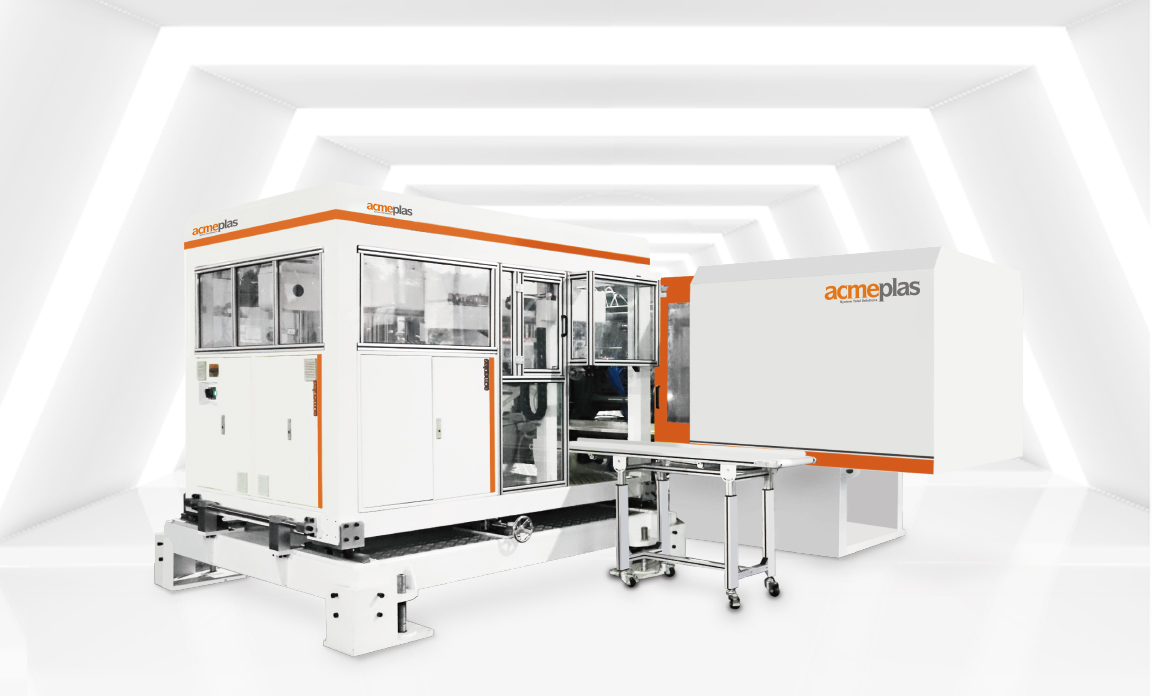





Who says three-layer co-injection molding is out of reach? acmeplas has already made it a breeze!
Publication Date:2019.03.09
Share:


With the continuous emergence of new polymer materials and the ever-increasing market demands for the performance of polymer extrusion products, single-layer products often have limitations and fail to meet application requirements. Consequently, three-layer co-injection products have emerged as a solution.
Three-layer co-injection products have gradually become the new favorite in the packaging market, and the production equipment for these products has consequently become a hot topic in market development.
Three-layer co-injection: This refers to the process of injecting PP/LDPE/PET into the fixed and moving mold walls, followed by the injection of EVOH (ethylene-vinyl alcohol copolymer) at a specific time point to form a barrier layer in the middle, and then completing the process with an additional layer of PP/LDPE/PET.
However, having a concept is one thing; actually producing finished products is quite another. Many well-known companies in the industry have researched this technology, but have consistently failed to resolve the challenges of mass production.
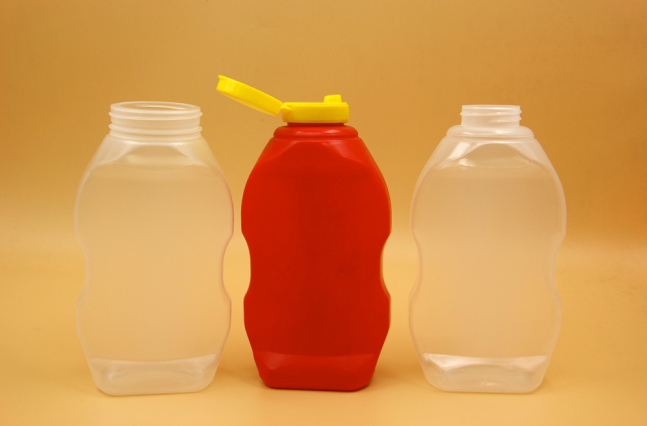
With this in mind, you will find that there are many three-layer co-extruded products on the market, including plastic beer bottles, jam jars, beverage bottles, ketchup bottles, canned fruit and vegetable jars, and milk bottles. However, there is virtually no packaging product or project experience related to three-layer co-injection hard plastic packaging, let alone the combination of EVOH with three-layer co-injection.
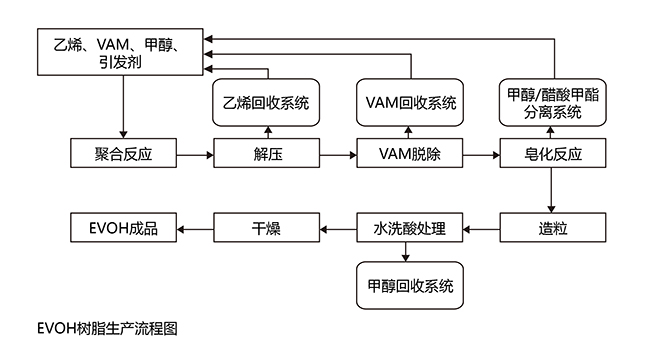
Due to the inherent instability of EVOH and the significant decline in its barrier properties in high-humidity environments (50% RH or higher), maintaining EVOH’s barrier performance under such conditions—and determining how to manufacture EVOH products—presents another major technical challenge.
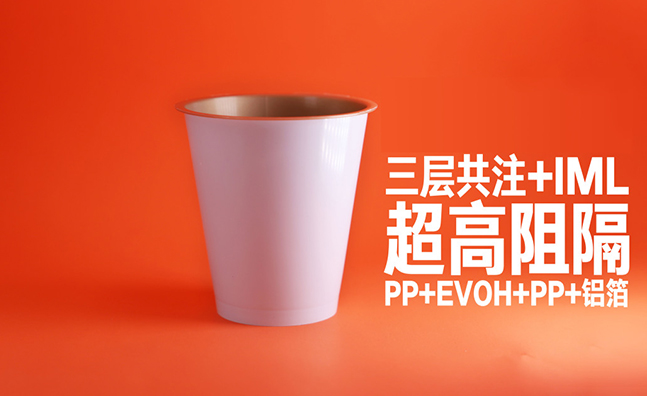
Committed to the mission of “building world-class systems,” the AcmePlas R&D team leveraged years of technical expertise to tackle system redesign, mold design, hot runner design, raw material selection, formulation optimization, and process debugging. After two rounds of trial molding and overcoming numerous technical challenges, they successfully developed a landmark three-layer co-injection technology featuring a PP+EVOH+PP structure. This marks another major technological breakthrough following the successful development of high-barrier milk tea cups in 2018.
The acmeplas three-layer co-injection system employs a three-step injection molding process, with materials bonded tightly without the need for an adhesive medium. This not only prevents a decline in product barrier performance caused by high-humidity environments but also resolves product issues resulting from separate extrusion.
However, acmeplas does not stop there. To achieve an exceptionally long shelf life for specialty foods, the company has incorporated aluminum foil IML (In-Mold Labeling) barrier technology alongside the three-layer co-injection process. The production cycle is comparable to that of standard IML; while there is still room for optimization, this also indicates a higher feasibility for mass production!
Acmeplas’s boldness in tackling cutting-edge technologies and achieving a breakthrough from “0” to “1” within the industry is inextricably linked to the corporate culture of the Keming Group. Keming has always upheld independent design and R&D as the cornerstone of its business, standing out in the market through innovative technologies developed in-house and winning over customers with its proprietary high-tech products. By continuously improving product quality and technological sophistication, the company remains a pioneer in China’s injection molding industry.
 Back to List