


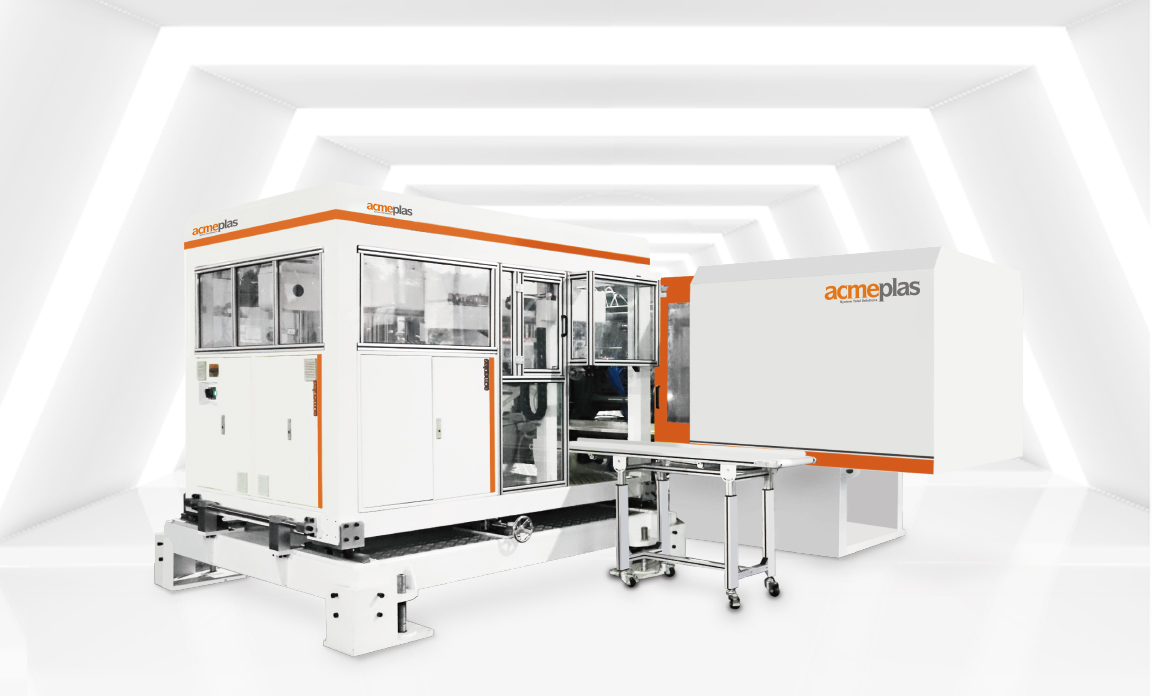





PET Preform Injection Molding System Case Study
The PET injection molding system is a comprehensive automated solution specifically designed for the production of PET preforms.
By integrating specialized equipment, it addresses challenges such as PET material’s susceptibility to moisture absorption and process sensitivity, enabling high-quality, high-efficiency preform production.
 Download the White Paper
Core Strengths
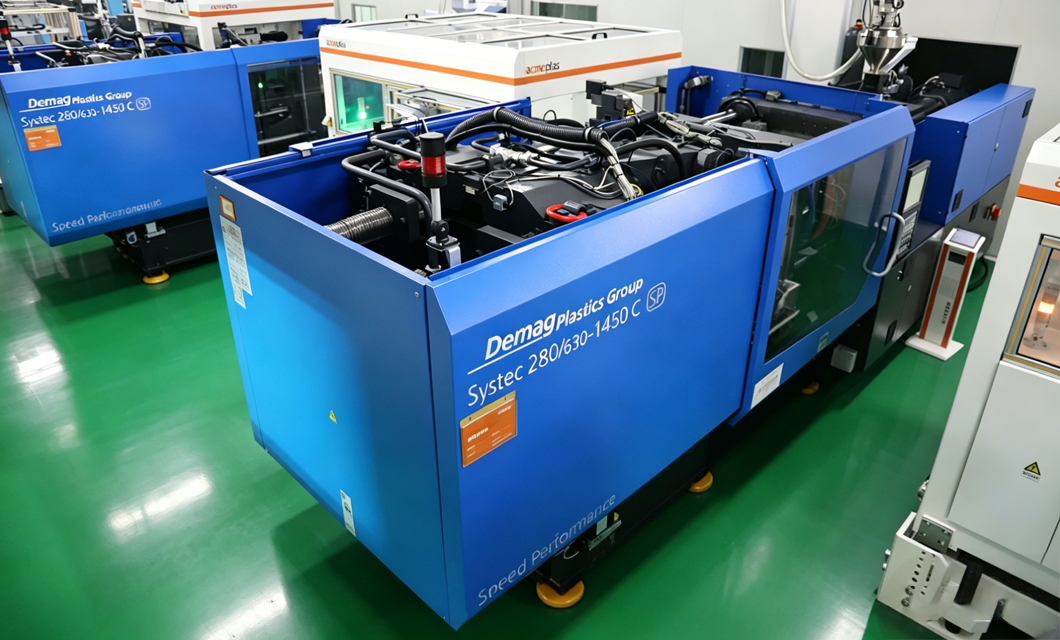
End-to-end supply chain integration capabilities
Advantages: We have established a comprehensive process spanning the supply of critical equipment, system integration, and end-product manufacturing. With independent control over key stages across the entire industry chain, we are able to provide one-stop services.
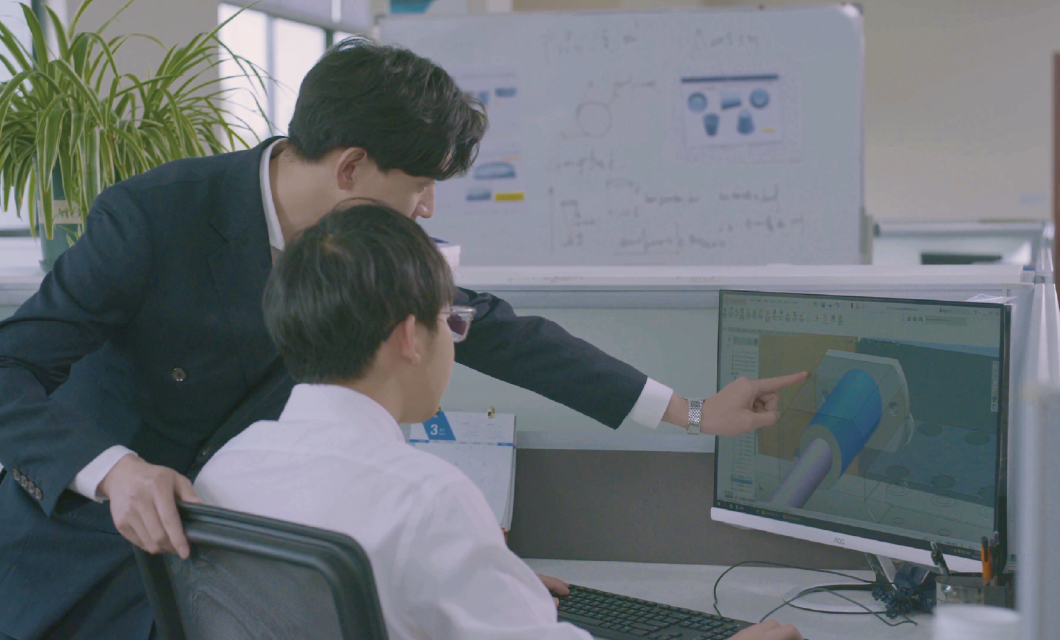
System integration capabilities
Advantages: Emphasizes production line integration rather than individual equipment manufacturing, ensuring seamless coordination among modules and reducing the complexity and risks associated with customers managing their own integration.
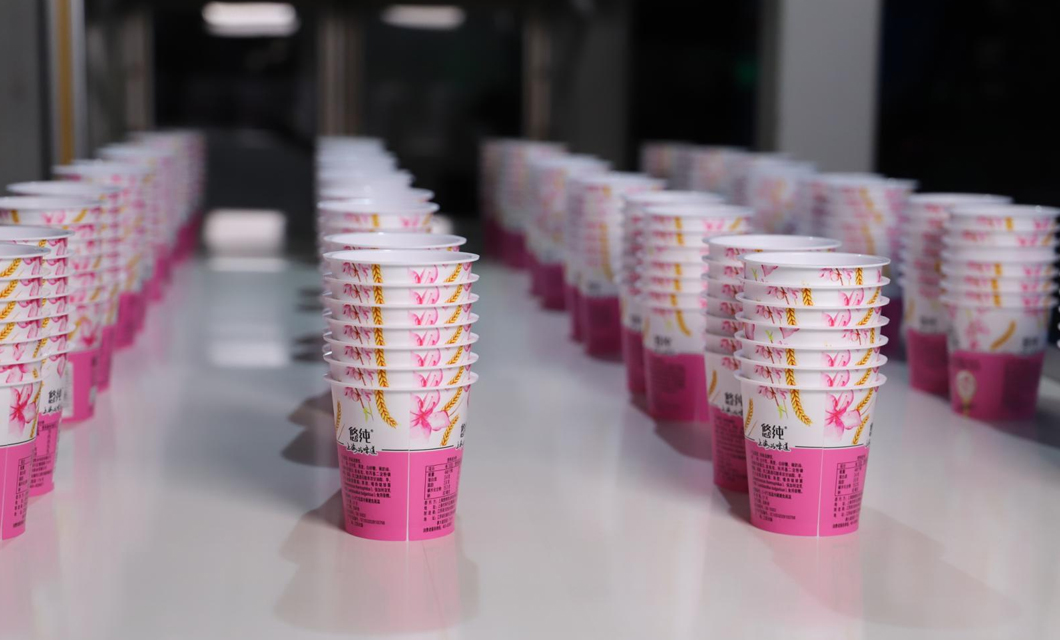
Pilot production validation
Advantages: Customers do not need to perform repeated debugging on their own production lines, which significantly reduces production risks and ensures the system is “plug-and-play.”
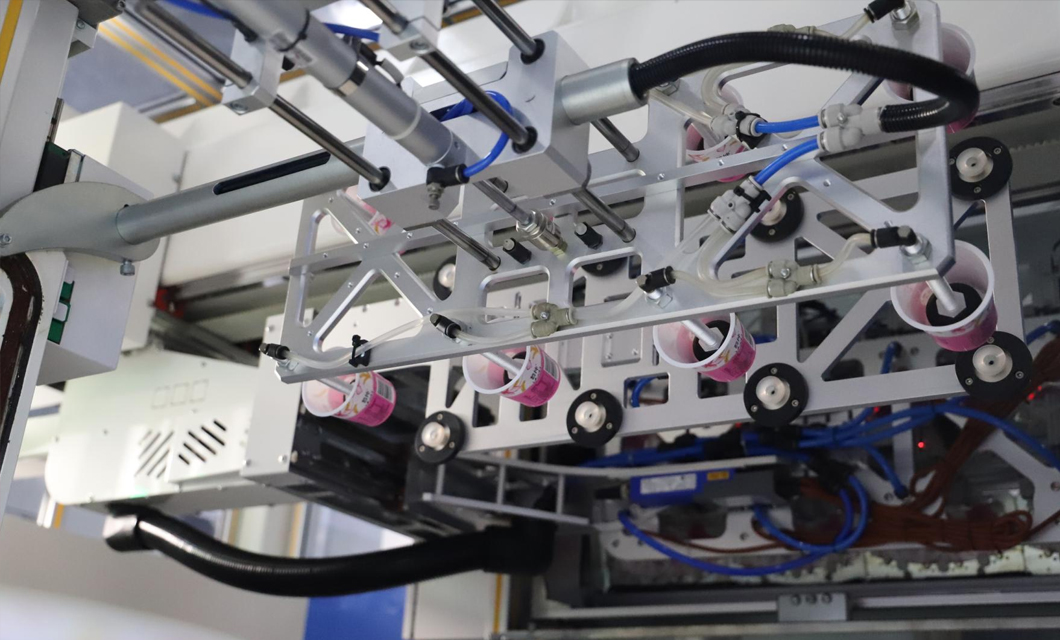
Modular Production Line Design
The automation system is compatible with injection molding machines from multiple brands.
Product changeovers require only the replacement of the mold core.
With multiple configuration options for automation equipment, setup time is reduced and utilization rates are increased.
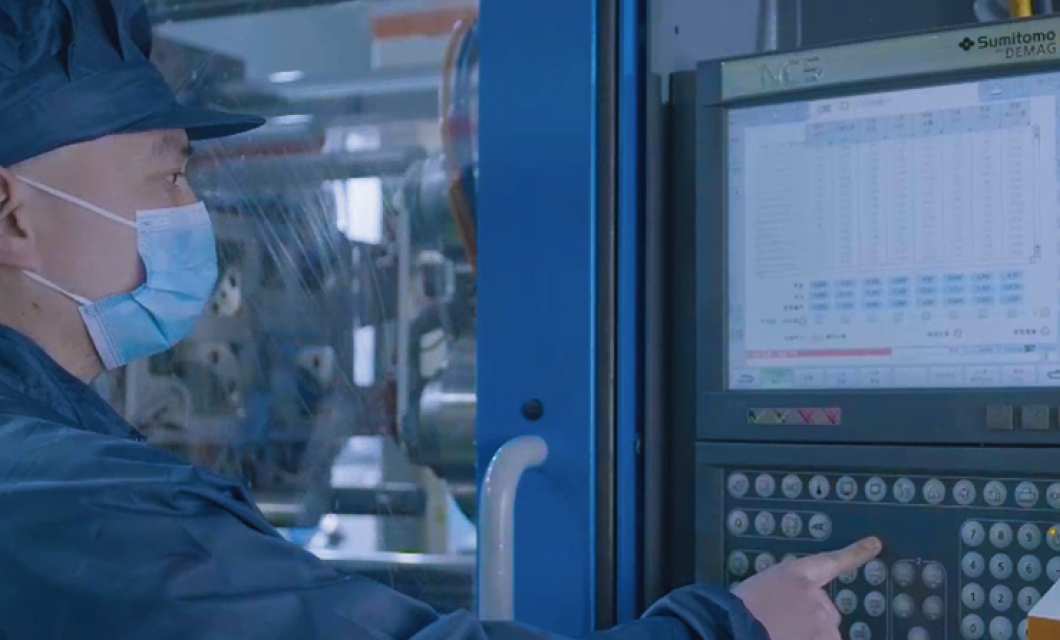
Data-driven, continuous iteration
Advantages: Design and system iterations are continuously driven by real-world production feedback, creating a closed-loop cycle of “production → feedback → optimization,” resulting in a system that becomes increasingly stable and efficient over time.
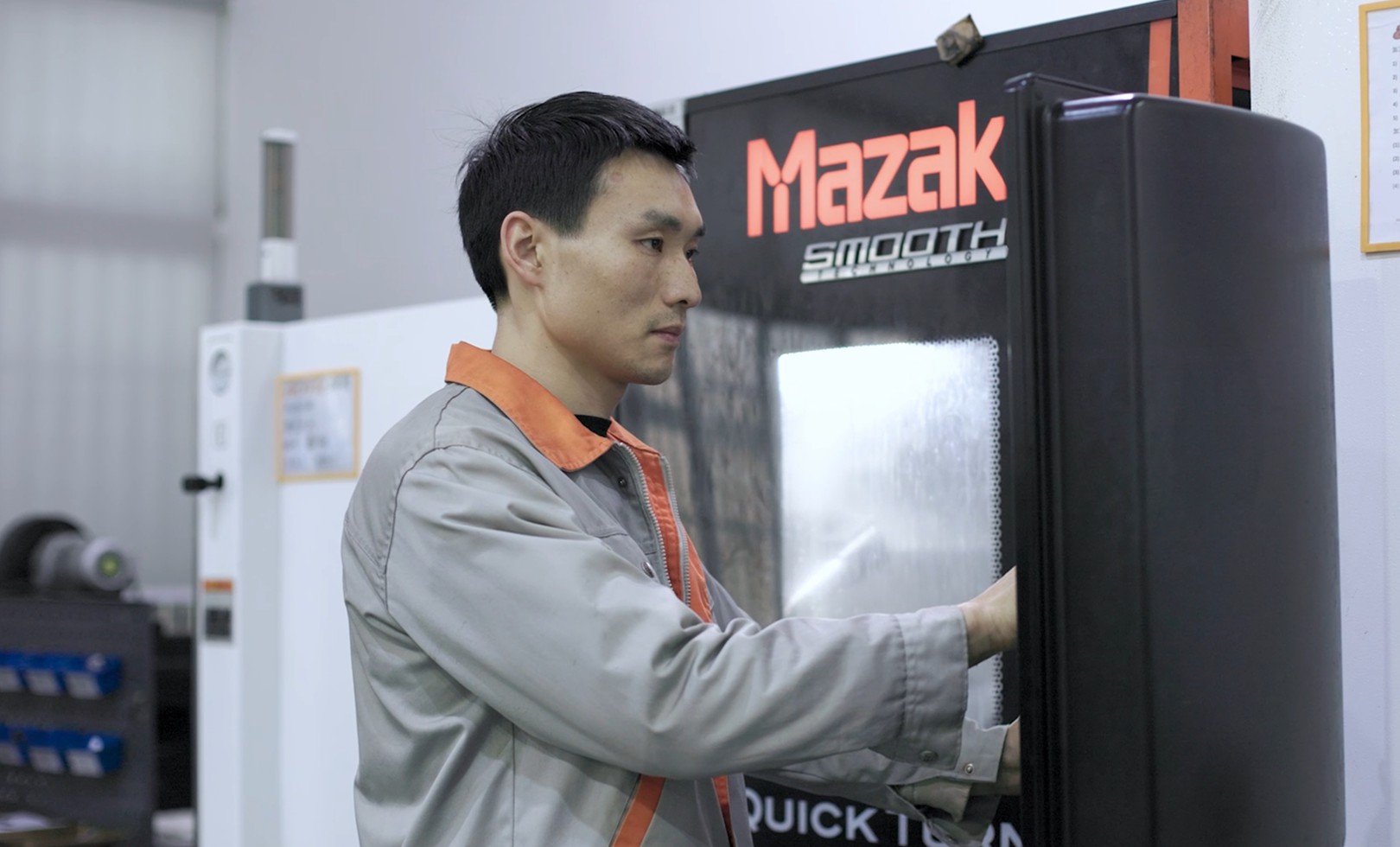
Four Key Indicators: “Three highs, one low”
① High quality, ② High consistency, ③ High efficiency, ④ Low labor costs
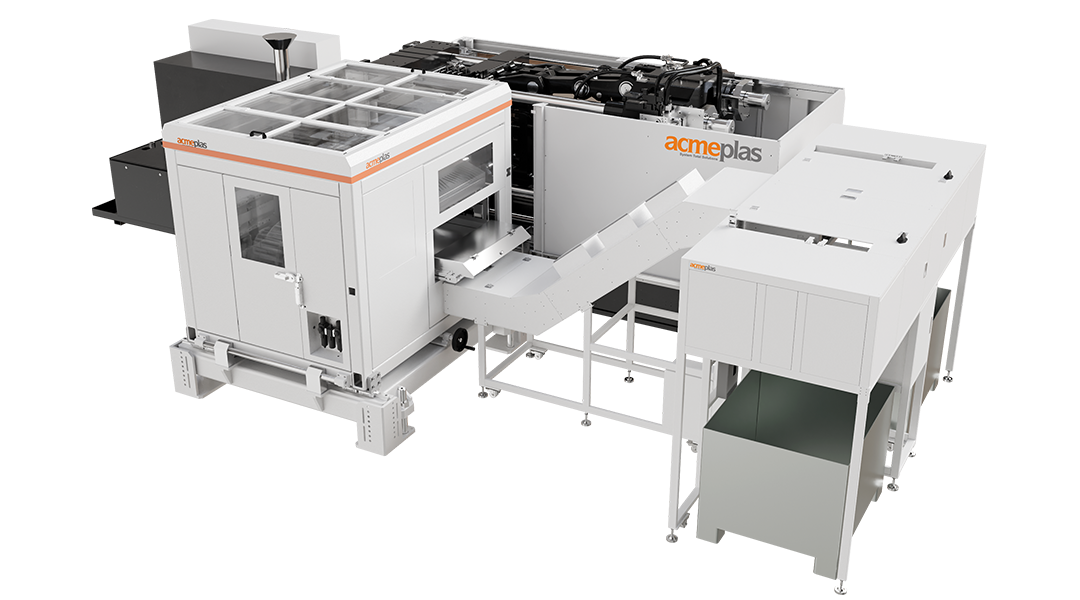
PET Preform Injection Molding System Case Study
By choosing an acmeplas machine as your foundation, you hold the key to the most efficient preform systems. When designing complete turnkey systems, we work closely with leading industry and market partners on your behalf.
acmeplas offers you a one-stop solution, including injection molding machines, molds, hot runners, automation equipment, dryers, chillers, and other peripheral equipment—not to mention our comprehensive expertise in PET injection molding.
Complete Process for Project Implementation

Project Concept


Conceptual Study

Project Work

Project Implementation

System Assembly and Testing

Trial Production and Acceptance

On-site installation

Process and Production Support




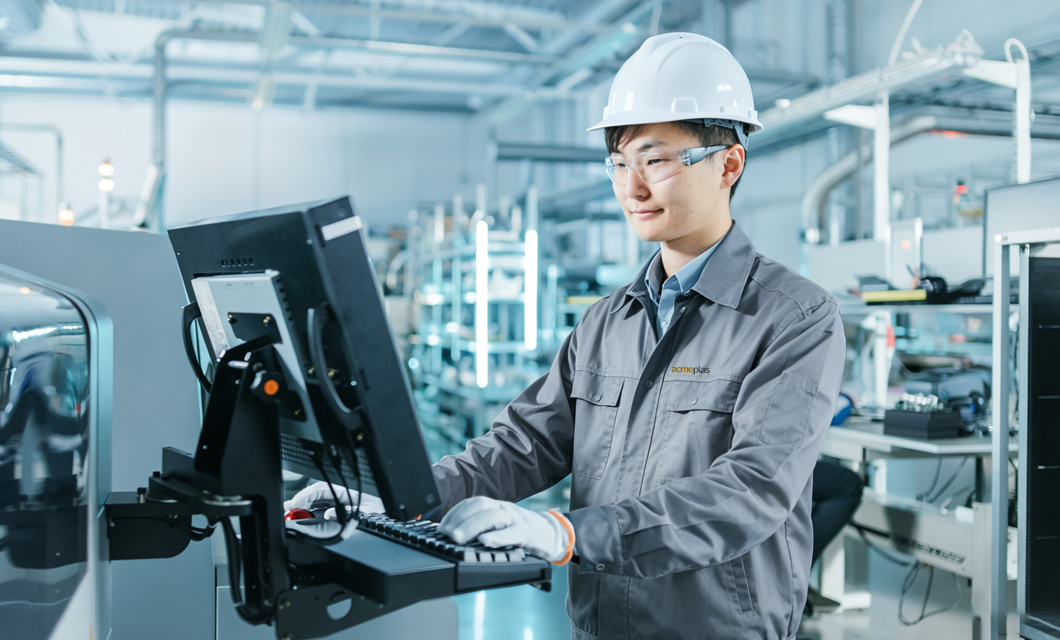
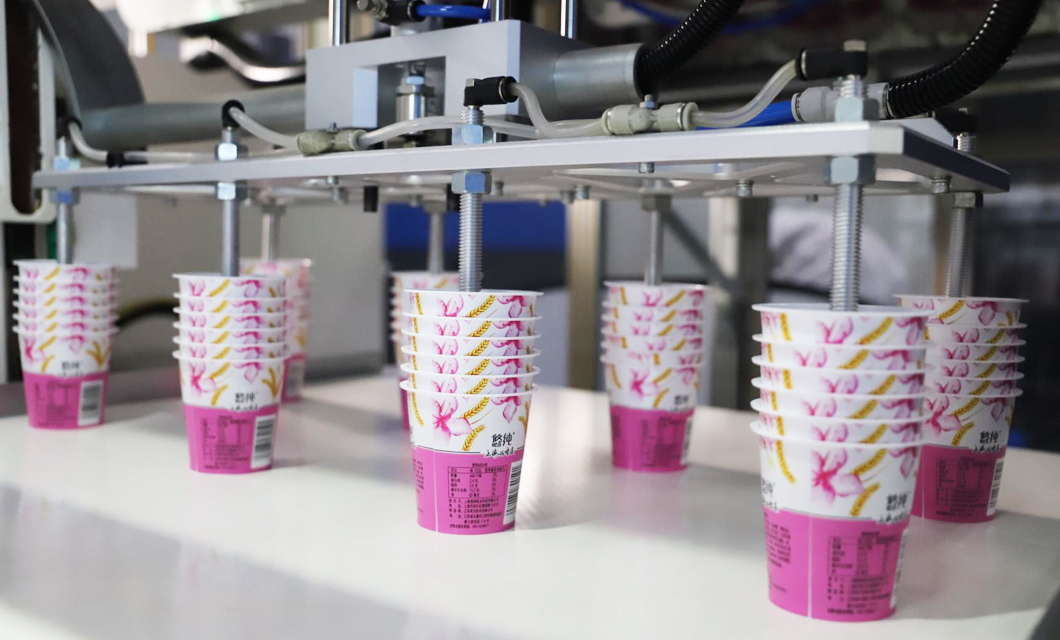
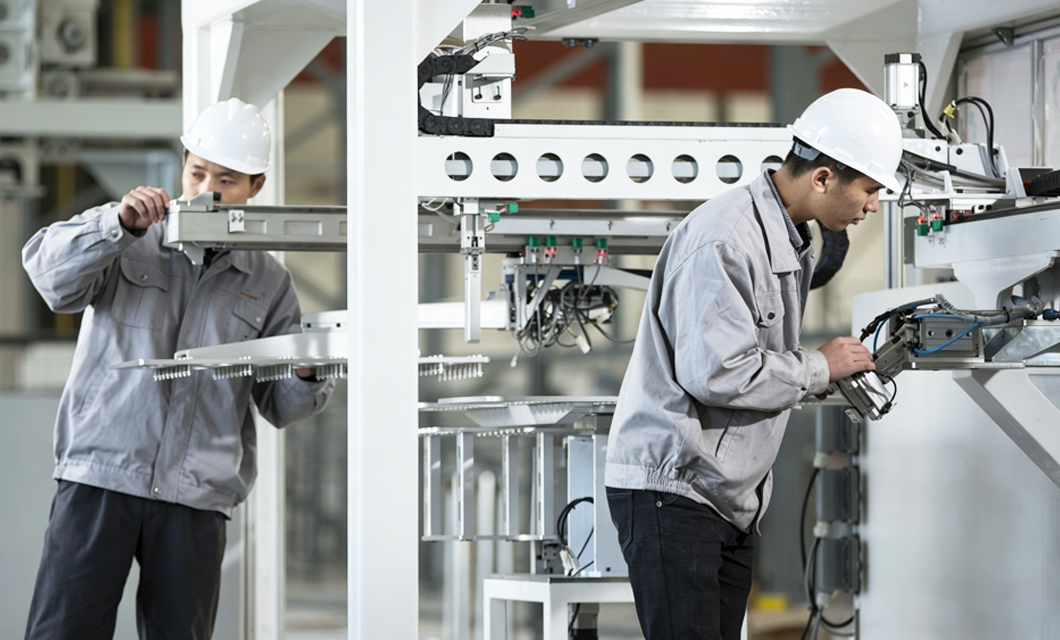
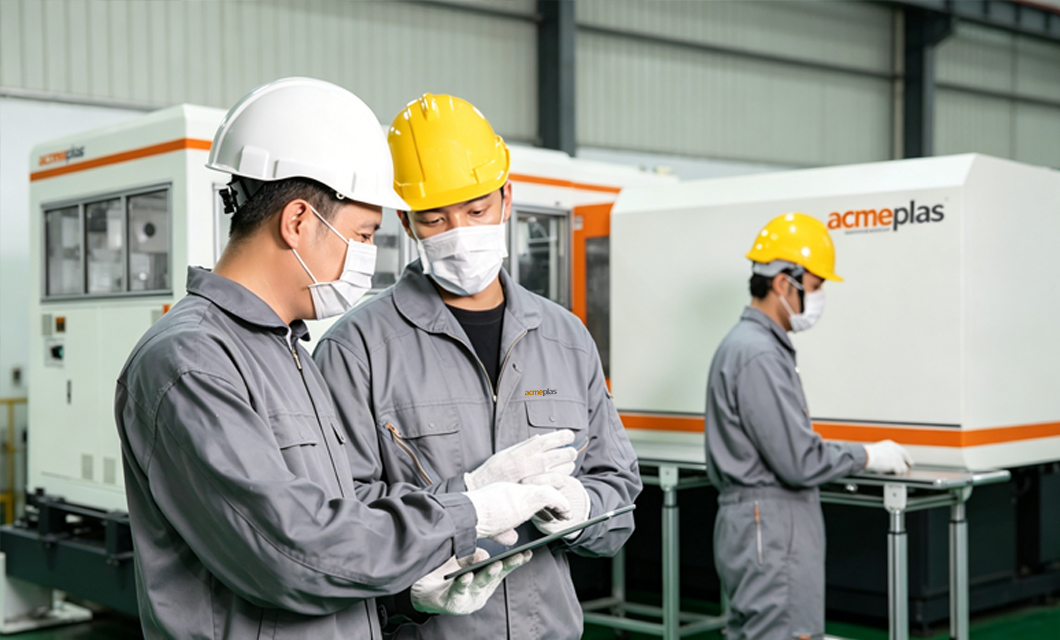
Project Concept
Part Concept Definition: Determine the product type (e.g., thin-walled containers, IML jam jars, yogurt cups, etc.); establish the product’s basic dimensions, capacity, and wall thickness range. Preliminary; determine the label coverage area (side label, full wrap, partial coverage, etc.).
Part Optimization (Weight, Functionality, Design, Decoration): Optimize the product structure to ensure proper draft angles and uniform wall thickness; design label positioning ribs or adhesion areas in conjunction with the IML process; evaluate the need for features such as heat resistance, scratch resistance, and high transparency; determine the style of decorative patterns, color requirements, and printing precision.
Technical Evaluation (Process): Assess the feasibility of the IML process (whether the label can adhere stably and whether the molding cycle meets requirements); Preliminarily determine whether stacked molds or multi-cavity molds are required; identify potential risks (e.g., label shifting, ink bleeding, uneven cooling)
Material Evaluation/Definition: Select the product substrate (PP, PE, PET, etc.); select label materials (films of the same material, such as BOPP, PP synthetic paper); confirm the type of label ink (heat-resistant, non-migrating); determine auxiliary materials (sealing rings for vacuum adhesion, model of electrostatic generator)
Conceptual Study
Competitor and Market Analysis: Collect case studies of IML applications for similar products; analyze the target market’s requirements for label appearance and durability.
Preliminary Mold Flow Analysis: Use mold flow analysis software to simulate the filling, holding pressure, and cooling processes; verify whether plastic flow in the label area is uniform to prevent label curling.
Label-Substrate Compatibility Testing: Test the hot-melt bond strength between the label and the plastic melt; verify whether the label will shrink or discolor under high temperature and pressure.
Preliminary Equipment Selection Plan: Determine the required injection molding machine tonnage and injection speed (high-speed machines recommended); preliminarily select the robot type (side-entry or top-entry); plan the basic configuration of the automated post-processing line (stacking, packaging).
Project Work
Detailed Mold Design: Design the layout of cavities, cores, and cooling channels; design label positioning structures (vacuum ports, electrostatic adhesion slots); design mold collision and scratch prevention structures.
Label and Printing Design: Finalize the label artwork and determine the imposition layout; select the printing process (gravure, flexography, digital printing); produce sample labels and conduct on-press testing.
Automation Solution Design: Design the label magazine, as well as the travel range and gripping method for the label-picking robot; design an integrated solution for product removal, conveying, stacking, and packaging; plan the control system architecture for the entire production line (PLC, HMI, MES interfaces).
Auxiliary Equipment Selection and Procurement List: List specifications for dehumidifying dryers, chillers, mold temperature controllers, air compressors, etc.; determine the models for conveyor belts, counting devices, and packaging machines.
Project Schedule and Budget Preparation: Establish milestones for mold manufacturing, equipment procurement, and assembly/commissioning; prepare a detailed budget, including provisions for trial production and contingency costs.
Project Implementation
Mold Manufacturing and Trial Molding: Machining, heat treatment, and polishing of mold components; conducting T0 trial molding at the mold factory to inspect label placement and molding results; mold optimization and maintenance (e.g., adjusting suction holes, adding venting).
Label and Printed Material Production: Bulk printing, die-cutting, and inspection of labels; anti-static and dust-proof treatment for label packaging.
Injection Molding Machine and Auxiliary Equipment Procurement/Manufacturing: Procurement or manufacturing of high-speed injection molding machines (e.g., hybrid hydraulic-electric machines); procurement of dehumidifying dryers, chillers, etc., and completion of factory testing.
Automation System Integration: Assembly of robots, label magazines, conveyor belts, and stackers; wiring of control systems and preliminary program debugging.
On-site Pre-assembly and Integrated Testing of the Complete Line: Assembling all modules into a production line at Keming or the supplier’s facility; conducting dry-run tests to verify timing synchronization.
System Assembly and Testing
Equipment Positioning and Leveling: Position the injection molding machine, robotic arm, conveyor belt, and other equipment according to the layout diagram; adjust the leveling and install vibration-damping pads.
Water, Electricity, and Air Line Connections: Connect the cooling water, compressed air, power supply, and signal lines; check the air line seals and voltage stability.
Safety Device Inspection: Verify the functionality of safety doors, light curtains, and emergency stop buttons; check the safety interlocks between the robotic arm and the injection molding machine.
Individual Equipment Functional Testing: Perform an idle run of the injection molding machine (mold opening/closing, ejection, injection unit); test the movement of each robot axis and label retrieval from the label magazine; ensure auxiliary equipment (dryer, mold temperature controller) reaches set values.
Full-Line Idle Cycle Integration Testing: Without a mold in place, simulate the process of label retrieval → mold opening → label placement → mold closing → part retrieval → conveying; adjust the timing of each action and optimize the cycle time.
Trial Production and Acceptance
Mold and Label Setup: Install the IML mold and connect the vacuum/static generator; load standard labels and test the accuracy of the adhesion position.
Process Parameter Tuning: Set the barrel temperature, mold temperature, injection speed, and holding pressure; optimize cooling time and balance the molding cycle.
Small-batch trial production: Continuously produce 100–500 molds, record the yield rate; inspect label positioning, fusion quality, and product dimensions.
Performance metric verification: Measure product weight, wall thickness, and label adhesion; test whether the line’s cycle time meets the designed capacity; verify that the scrap rate is below the agreed-upon threshold (e.g., <1%).
Continuous operation testing of the automation system: Run continuously for 24 hours and record the number of shutdowns; verify the accuracy of stacking and packaging counts.
Signing of the acceptance report: Compile test data and have both parties confirm compliance with requirements; develop a corrective action plan for outstanding issues; sign the provisional or final acceptance form.
On-site installation
Site Survey and Preliminary Preparation: Verify the workshop floor’s load-bearing capacity, ceiling height, and logistics pathways; identify locations for cooling water, power, and compressed air connections.
Equipment Hoisting and Unpacking: Arrange for a crane and forklift to move the equipment to the installation site; remove packaging and inspect the exterior and spare parts.
Leveling and Securing: Use a spirit level to adjust the equipment’s level; secure with anchor bolts or install vibration-damping pads.
Preliminary Connections: Connect the main power supply and control cables; connect cooling water lines and air hoses.
Site Cleanup and Signage: Clean up installation debris and post safety and operating signs.
Process and Production Support
Operational Training: Train customer operators (injection molding machines, robotic arms, and automation interface operation); train process engineers (parameter adjustment, mold maintenance, and label replacement); train maintenance technicians (troubleshooting common issues and replacing wear-and-tear parts).
Process Documentation and SOP Delivery: Provide Standard Operating Procedures (SOPs); provide mold maintenance guidelines and label storage requirements; provide electrical schematics and pneumatic diagrams for the entire production line.
Remote and On-site Technical Support: Establish a 24/7 remote support hotline; conduct regular on-site inspections (e.g., quarterly); respond to emergency faults within 4 hours and arrive on-site within 24 hours.
Spare Parts Supply and Maintenance Agreement: Provide a list of wear-and-tear parts and recommended stock levels; sign an annual maintenance contract that includes preventive maintenance; system software upgrades and feature enhancements.
Continuous Optimization and Data Iteration: Collect customer production data to optimize molds or processes; provide modular retrofit solutions based on new product requirements; conduct regular follow-ups to gather suggestions for improvement.
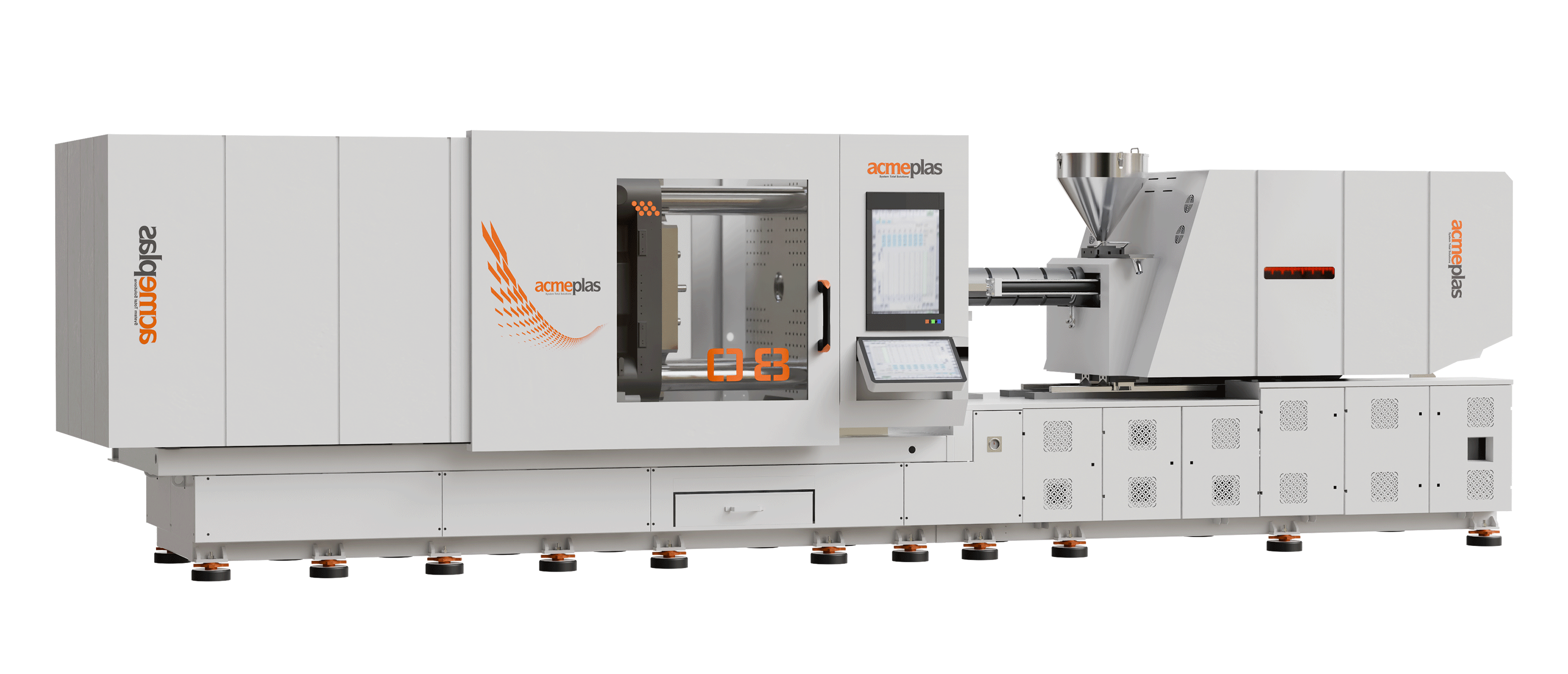

acmeplas
Full-industry-chain solution supplier: self-developed injection machines, molds & automation systems
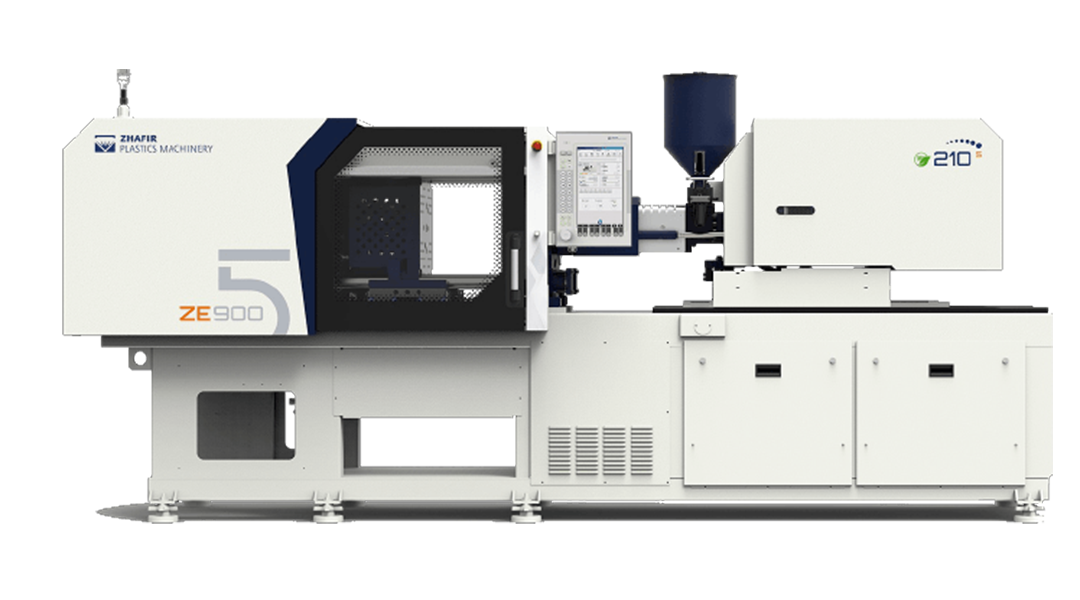

ZHAFIR
Haitian High-End All-Electric Injection Molding Machines: High Precision, Energy Efficient & Intelligent
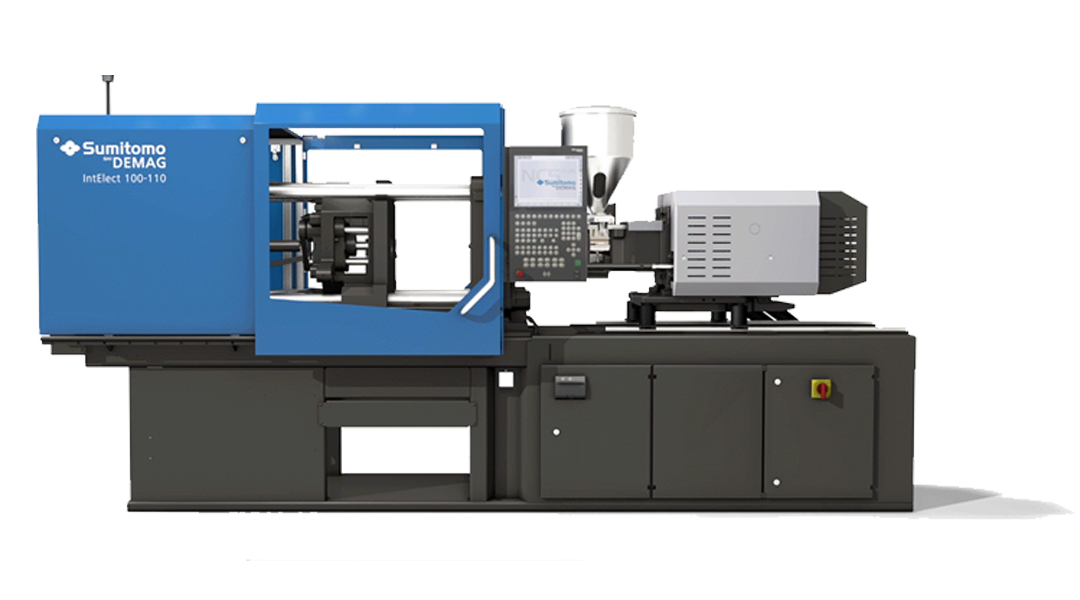

Demag
70-Year German Brand | Precision, Stability & Energy Efficiency
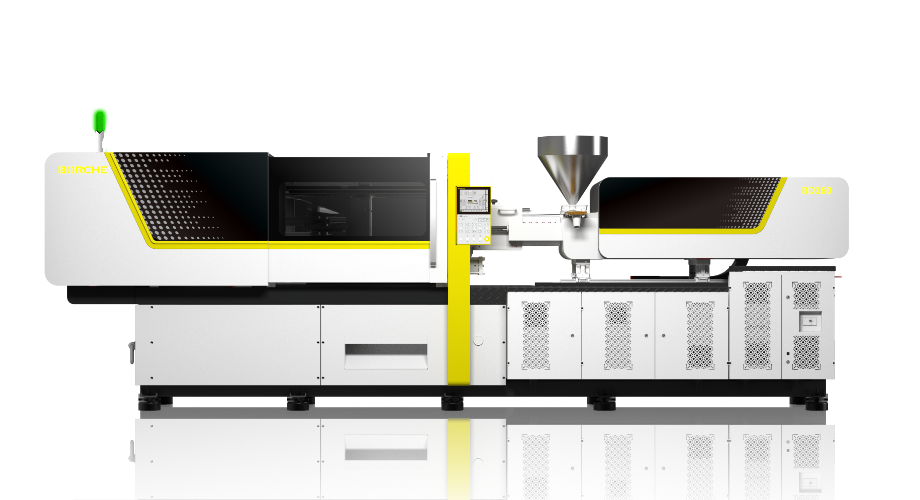

BORCHE
Two-Plate Intelligent Injection Molding Machine Expert | Energy Efficient & High Precision
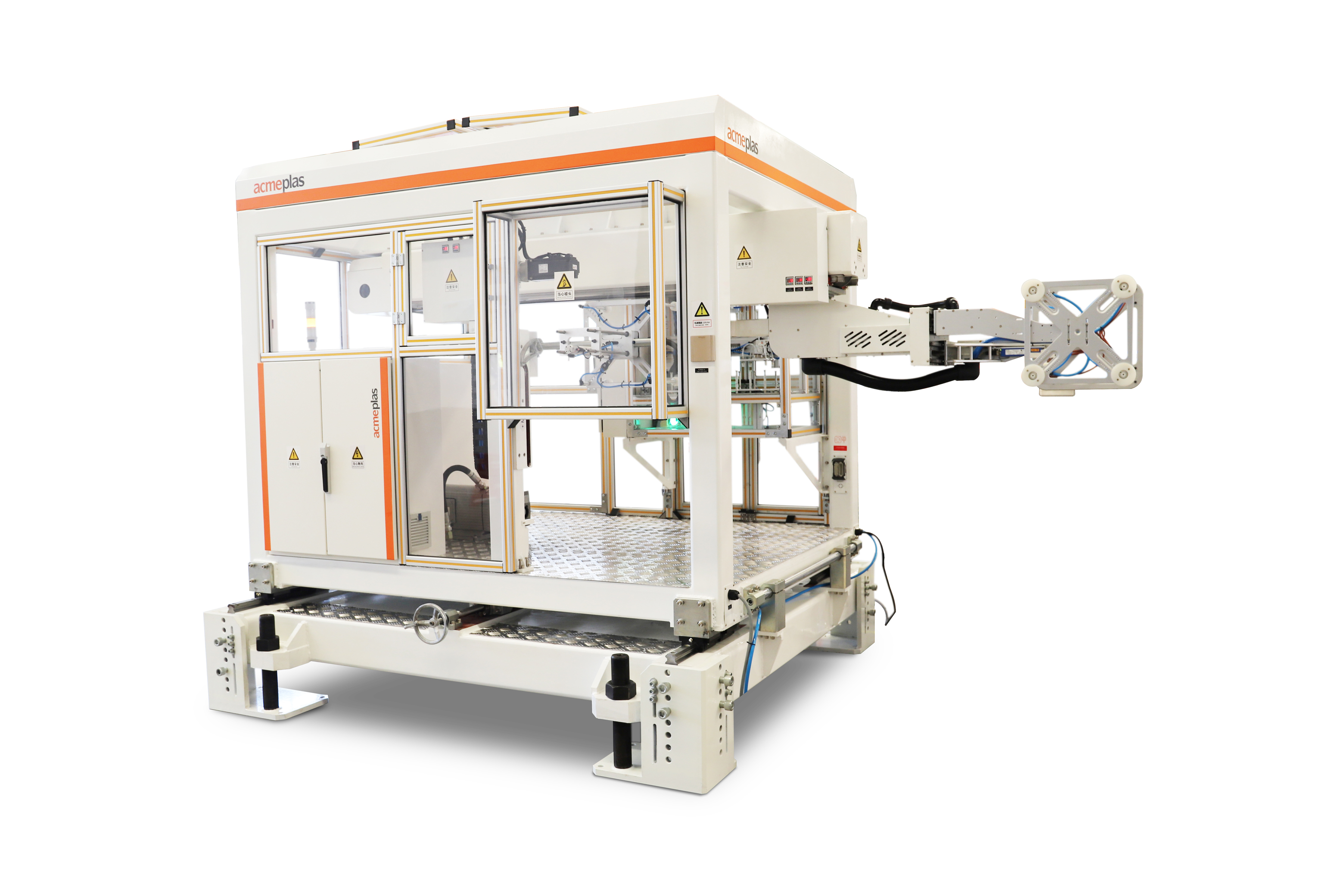
Robotic Arm and Labeling Station
The labeling magazine is a device in the IML automation system used to store, separate, and position pre-cut labels. It ensures that the robot arm picks up a single label from the same position and in the same orientation every time, preventing double or multiple labels from sticking together and ensuring positional accuracy when the label is placed into the mold.
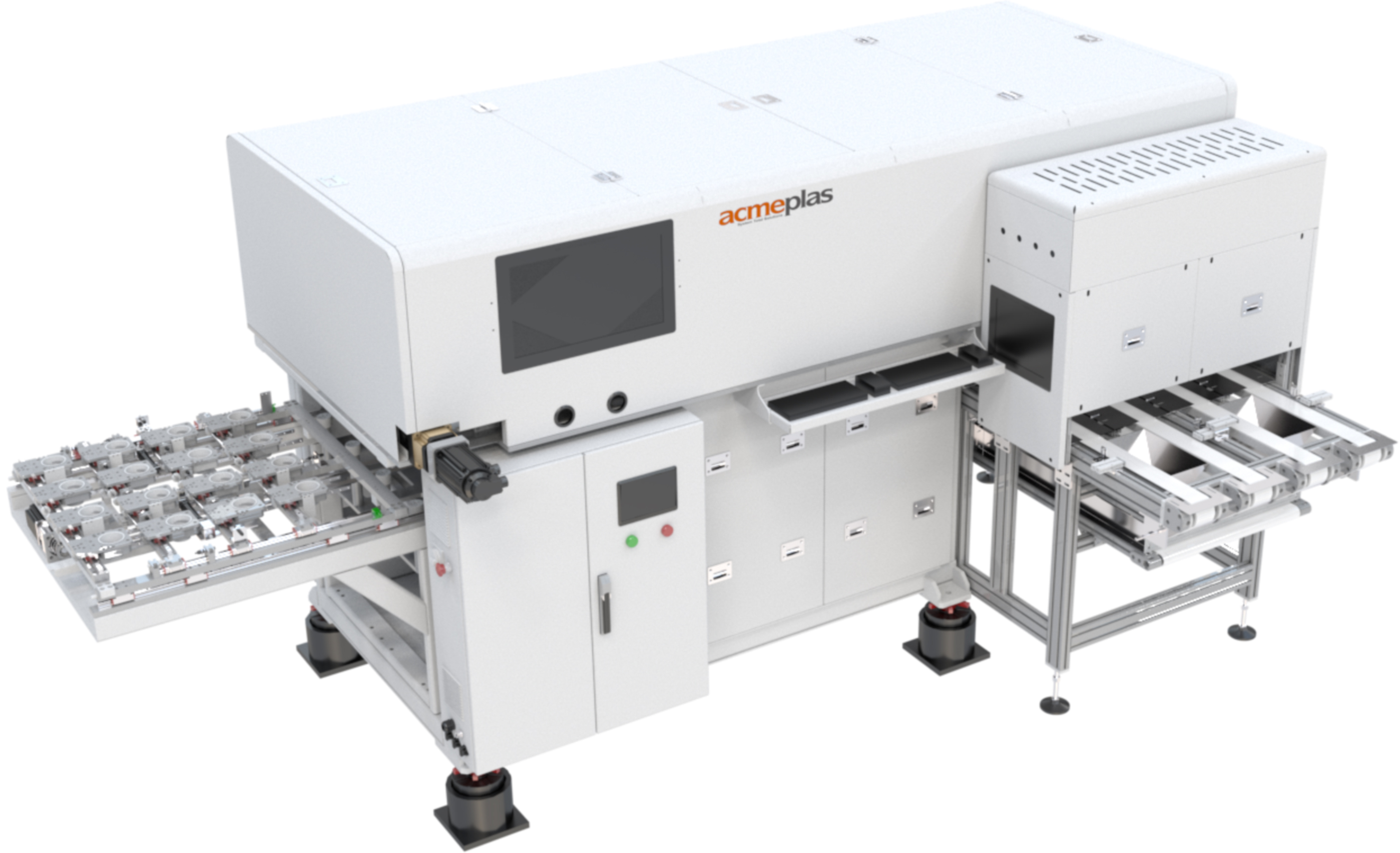
Online Visual Inspection
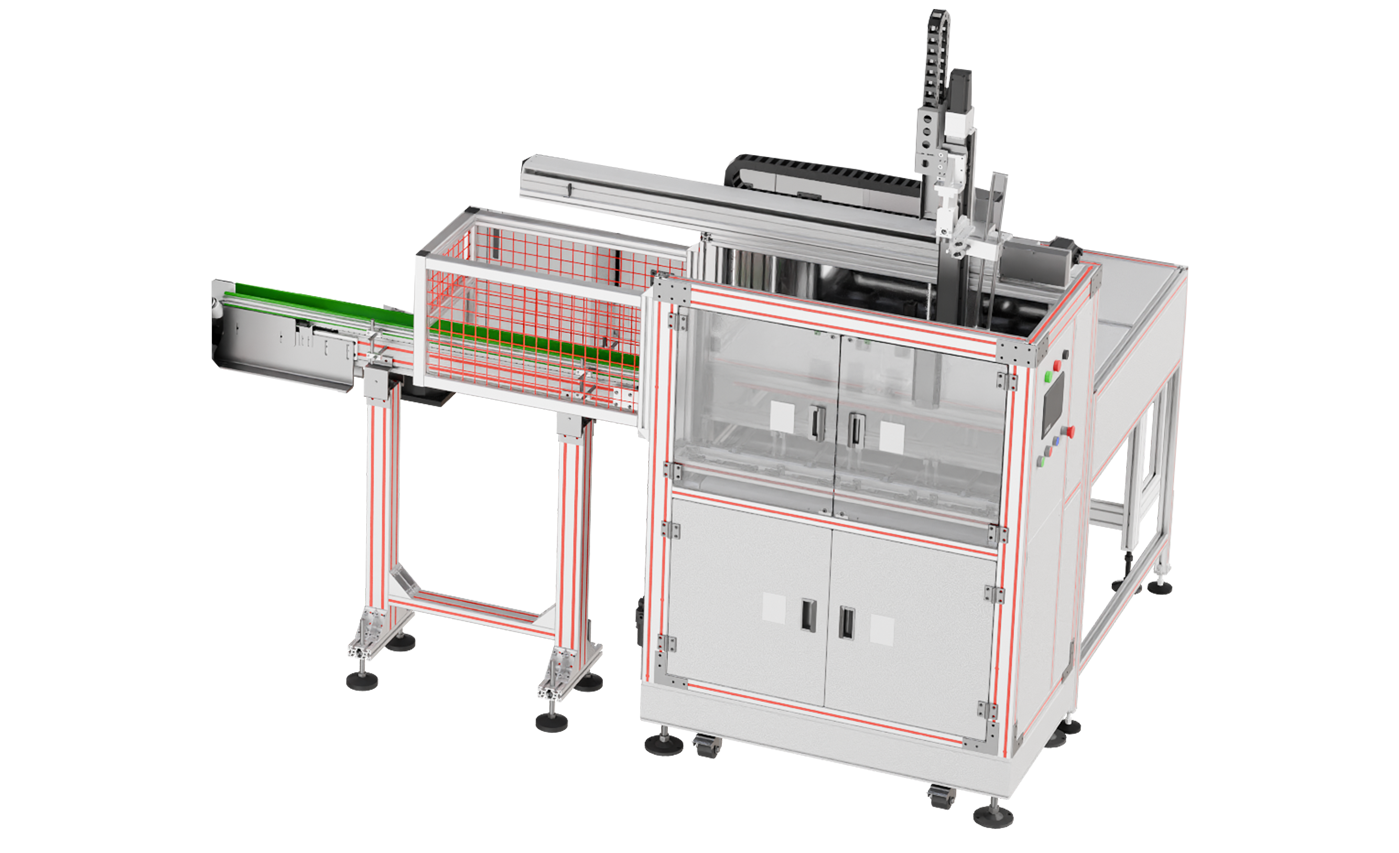
Visual inspection serves as the “intelligent quality inspector” on IML production lines. Capable of performing comprehensive inspections on every product at millisecond speeds and with precision far surpassing that of human inspectors, it is a critical component in achieving unmanned production with high yield rates.
Stacker
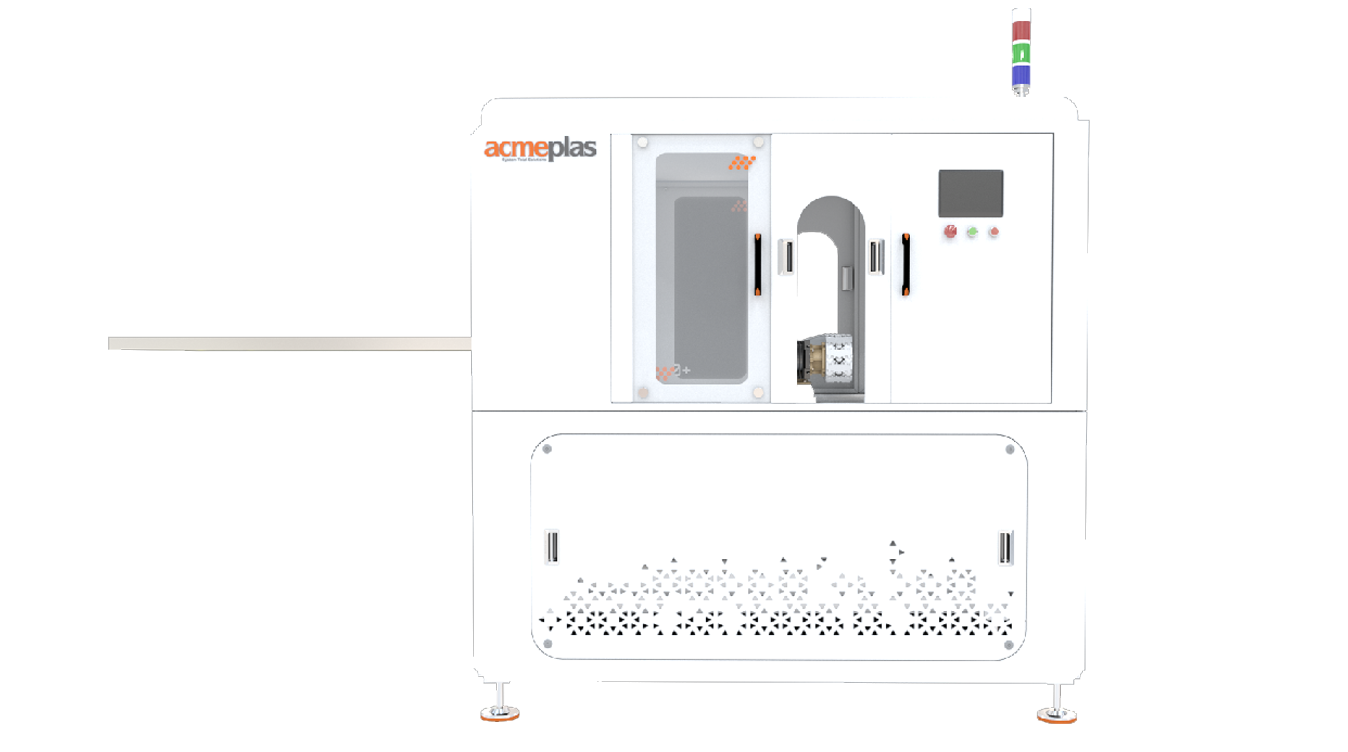
The stacking machine is a key piece of equipment for downstream automation in IML production lines. It neatly stacks injection-molded products in predetermined quantities to prepare them for subsequent packaging, effectively replacing manual stacking and serving as a crucial component in enabling “unmanned factory” production.
Baling machine
The packaging machine is a critical piece of equipment at the end of the IML production line, serving as the link between manufacturing and warehousing. By automatically sealing, strapping, and wrapping stacked products, it completes the final packaging process for storage and transportation, marking the “final step” in the fully unmanned operation of a “lights-out factory.”
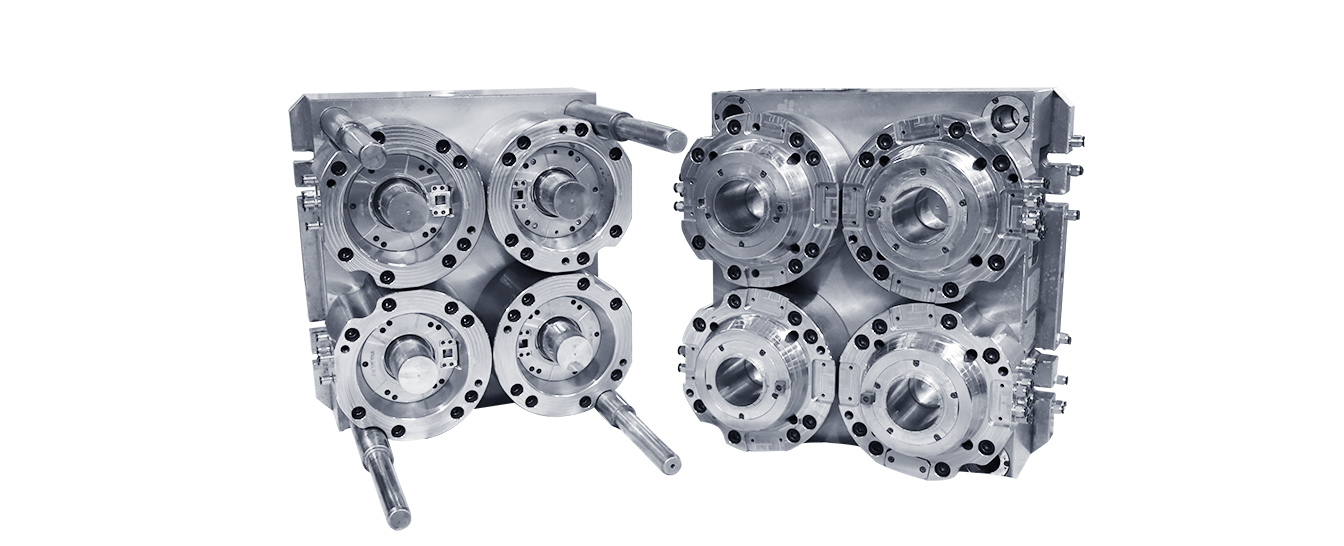
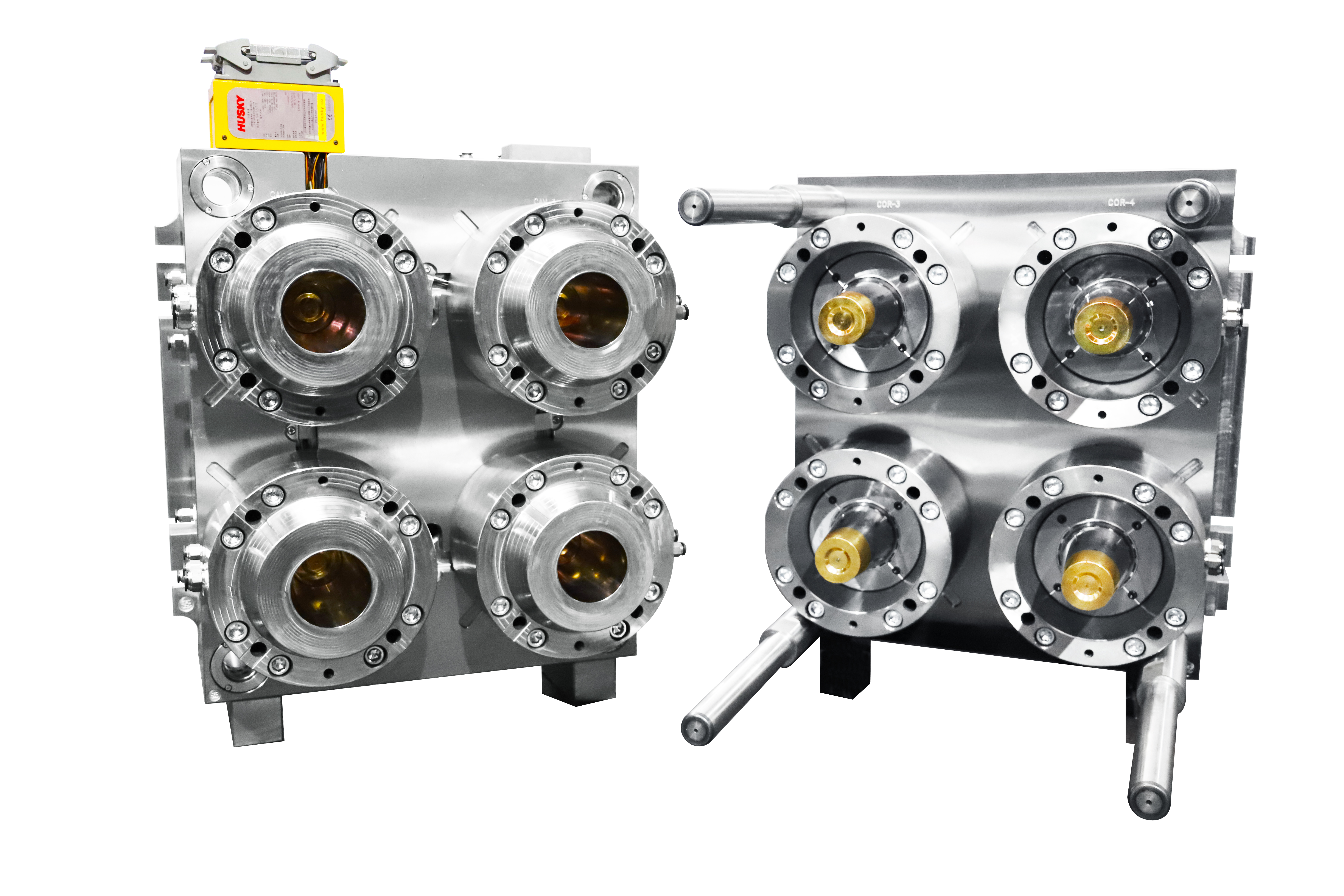
4-cavity mold
Simply replace the mold core to switch production lines
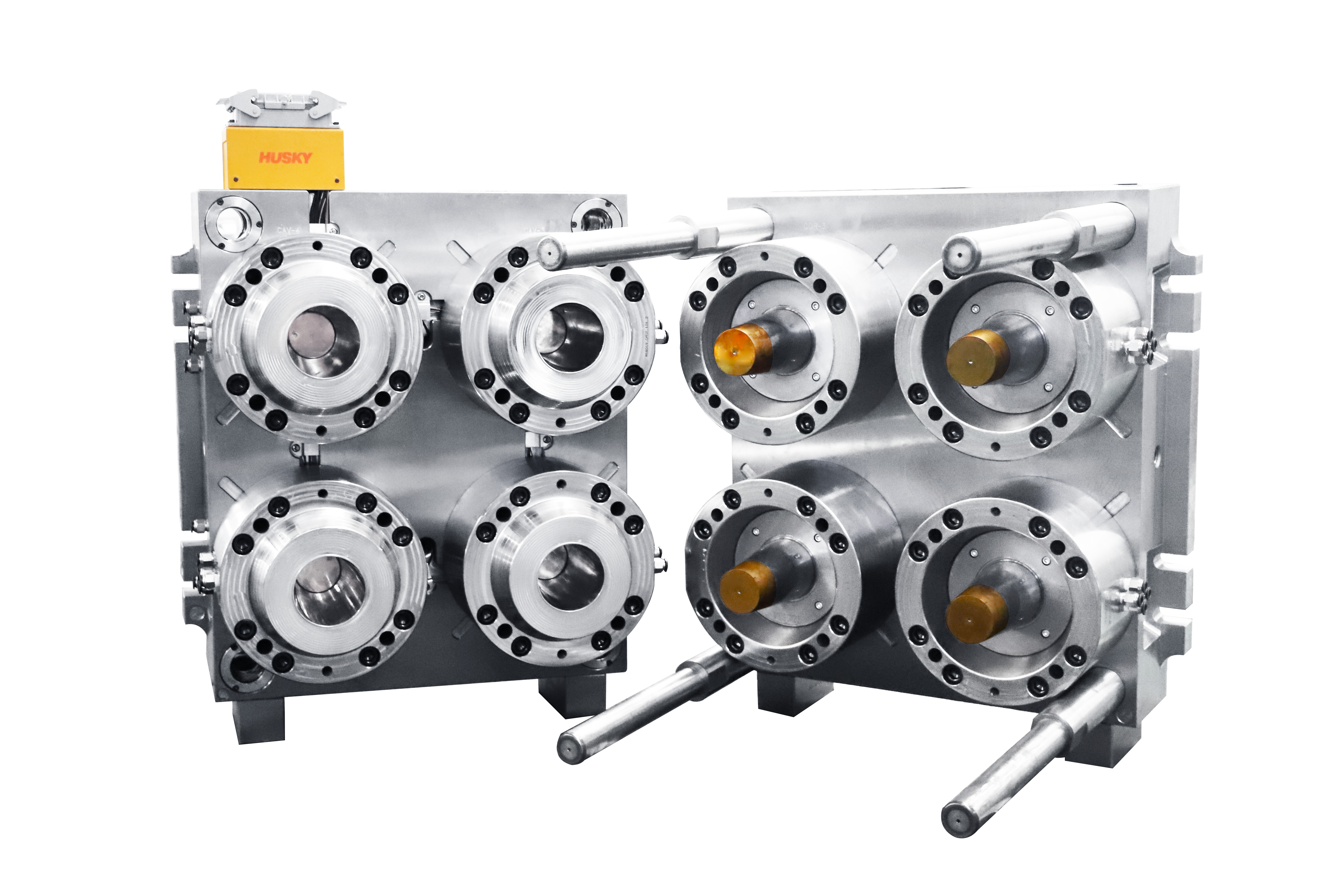
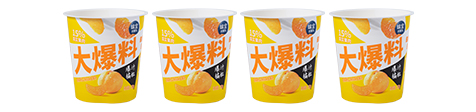
4-cavity mold
Simply replace the mold core to switch production lines

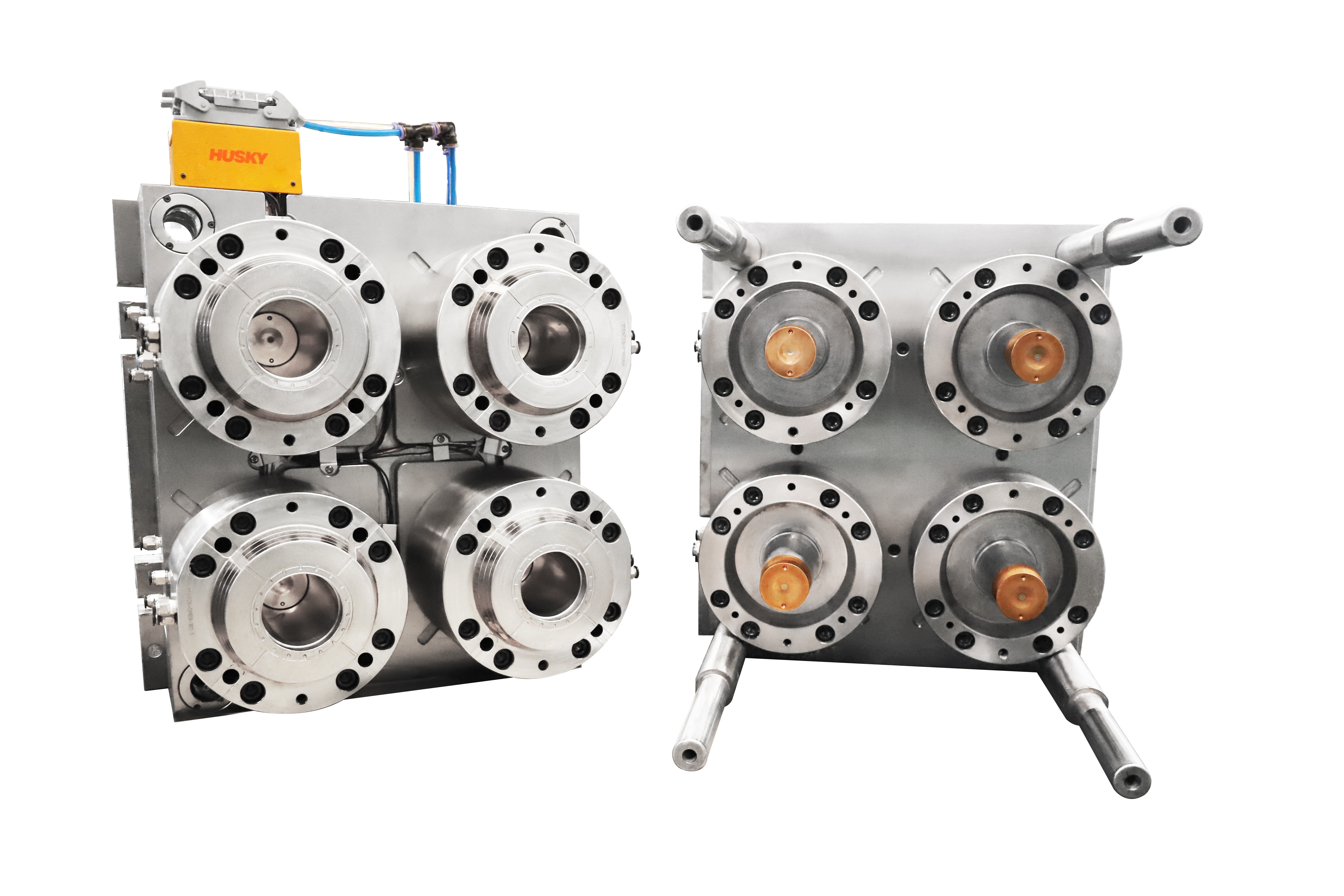
4-cavity mold
Simply replace the mold core to switch production lines
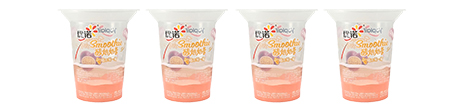
4-cavity mold
Simply replace the mold core to switch production lines
PET Preform Injection Molding System Case Study


News and Technology

2026.04.01
[Invitation] acme Group × CHINAPLAS 2026: One-Step Injection-Blow Molding + External Micro-Foaming—A Major Joint Exhibition Featuring Two Innovative Systems!
“CHINAPLAS International Plastics & Rubber Exhibition” has grown alongside China's plastics and rubber industry for over 40 years. Today, it has evolved into Asia's largest plastics and rubber trade show and has played a significant role in driving the development of China's plastics and rubber industry. Today, “CHINAPLAS International Plastics & Rubber Exhibition” is a globally leading trade show for the plastics and rubber industry. Industry professionals widely recognize its influence as second only to Germany’s “K Show,” making it one of the world’s premier events in the sector.

2019.03.09
Who says three-layer co-injection molding is out of reach? acmeplas has already made it a breeze!
With the continuous emergence of new polymer materials and the ever-increasing market demands for the performance of polymer extrusion products, single-layer products often have limitations and fail to meet application requirements; consequently, three-layer co-injection molded products have emerged as a solution.
2019.04.09
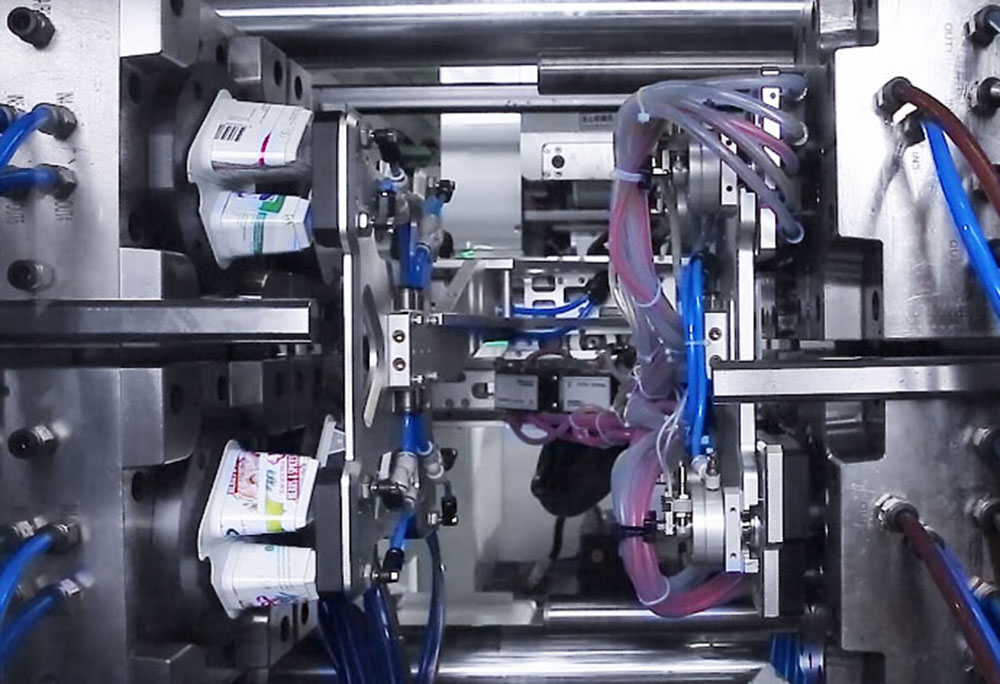
Intelligent Production System for In-Mold Labeled Boxes – Foldable Jam Jars
In July 2017, Keming received a request from a client to customize a production system for foldable jam jars. Following research, design, manufacturing, and assembly and debugging by our professional team, the client visited the Keming factory in November of the same year to inspect the system, and AcmePlas successfully delivered this intelligent production system.

Lifecycle Services

Launch phase
We provide comprehensive support throughout the entire process, from machine installation and commissioning to employee training, and even during the project planning phase (if needed).

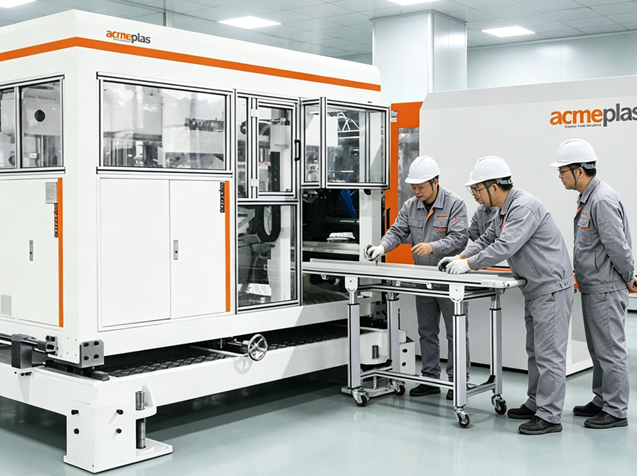
On-site Installation and Commissioning
- Power-on testing of individual units and inspection of safety devices
- Dry run and integrated testing of the entire line to verify timing synchronization

Trial Production and Acceptance
- Adjust process parameters (temperature, pressure, speed, cooling time)
- Conduct a small-batch trial production (100–500 molds) and record the yield rate
- Verify performance metrics (grammage, wall thickness, label adhesion, cycle time)
- Sign the provisional/final acceptance report

Operations Training
- Process technician training: parameter adjustment, mold maintenance, label replacement
- Maintenance technician training: troubleshooting common issues, replacement of wear parts
Document Delivery
- Mold maintenance guidelines and labeling/storage requirements
- Electrical schematics, pneumatic diagrams, and mechanical drawings
- List of wear-and-tear parts and recommended stock levels
Utilization phase
From machine installation and commissioning to employee training
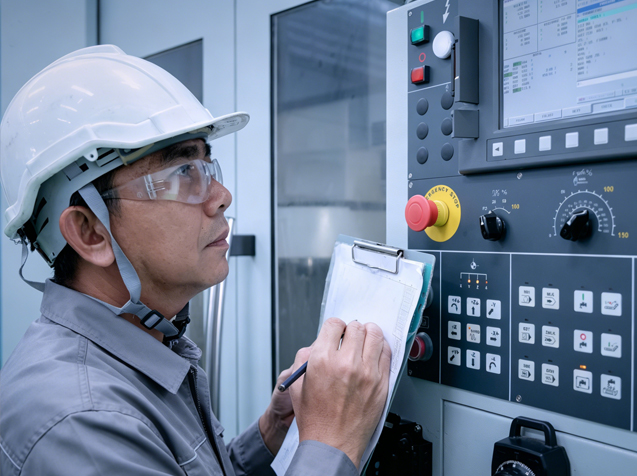
Daily Operations Monitoring
- Record production output, yield rate, number of downtime incidents, and their causes for each shift
Preventive maintenance
- Daily: Clean the mold, check the vacuum/electrostatic adhesion, and clean the label library brushes
- Weekly: Check the robot lubrication and tighten the air line connections
- Monthly: Replace filters and calibrate sensors
- Quarterly: Descale the mold cooling channels and dust the electrical cabinets

Spare Parts Management
- Procure critical spare parts with long lead times in advance

Technical Support Response
- Emergency response: Response within 4 hours; on-site within 24 hours
- On-site inspections: Once per quarter

Production Data Log
- Statistical analysis of visual inspection defects (label misalignment, air bubbles, material shortages, etc.)
- Individual cavity tracking (for multi-cavity molds)
Optimization Phase
We provide comprehensive support throughout the entire process, from machine installation and commissioning to employee training, and even during the project planning phase (if needed).
Process Parameter Optimization
- Use mold flow analysis software to validate the optimized solution
- Conduct a DOE (Design of Experiments) to identify the optimal combination of parameters
Mold Improvements
- Add venting channels to reduce label bubbles caused by trapped air
- Replace the mold with wear-resistant materials to extend its service life
Automation Upgrade
- Addition of an automatic label-changing module and an automatic mold-changing system
- Introduction of AGVs (Automated Guided Vehicles) to enable automated material delivery

Improved changeover efficiency
- Add a quick-change mechanism for die inserts
- Optimize the label library switching method (pre-installed label racks)

Energy Efficiency Optimization
- Waste heat recovery and utilization
- Centralized air supply systems for air compressors and leak detection

In-Depth Data Analysis
- Establish a defect prediction model to provide early warnings for abnormal molds
- Generate OEE (Overall Equipment Effectiveness) reports

Extend the product lifecycle or phase it out?
We provide comprehensive support throughout the entire process, from machine installation and commissioning to employee training, and even during the project planning phase (if needed).
Extension — Equipment Refurbishment and Retrofit
- Upgrade the injection molding machine control system (e.g., replace with a more advanced controller)
- Replace robot guide rails and lead screws
Extension — Technical Compatibility Upgrade
- Upgrade the hardware of the vision inspection system (higher-resolution cameras, brighter lighting)
Extension—Extend the Maintenance Contract
- Includes annual overhauls, emergency response, and spare parts supply
Extension—Performance Verification (Round 2)
- Compare cycle times, yield rates, and energy consumption before and after refurbishment

Write-off — Asset Valuation
- Compare the maintenance costs of continuing to use the equipment versus the return on investment for new equipment

Phase-out — Research on New Technologies
- Obtain quotes and technical proposals from suppliers

Elimination—Developing an Elimination Plan
- Plan the transition window between the old and new production lines (e.g., during holidays)
- Plan for spare parts consumption (no new inventory will be added)

Phase-out — Procurement and Installation of New Equipment
- Dismantle, dispose of, or sell existing equipment on the second-hand market

Elimination—Knowledge Transfer
- Retrain operators